
SnowBuzz
In clothing or equipment: the technology that helps locate you in an emergency on the mountain
The integrated search and rescue system currently used in millions of ski and hiking equipment items around the world has become a central tool for professional rescue teams in cases of snow avalanches or disappearances in mountainous areas. How does it work and why is it needed? All the details
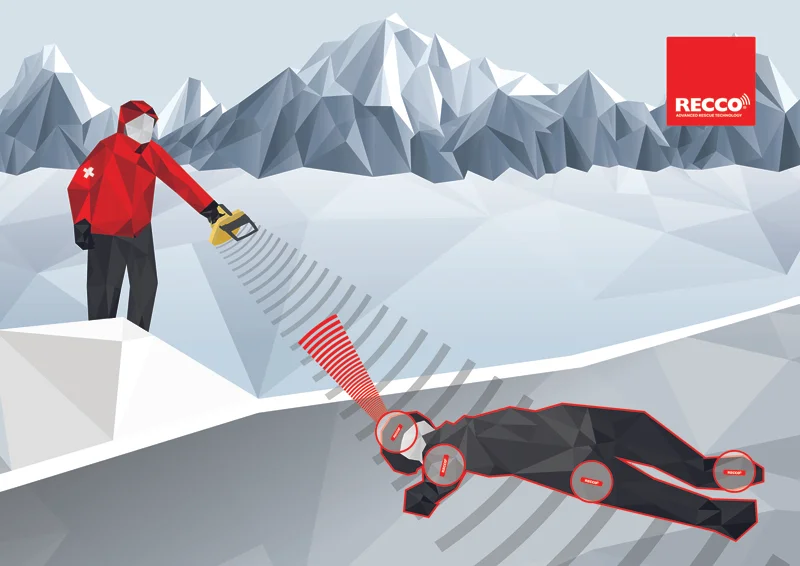
The system is based on two components: a detector operated by the rescuers and a signal reflector embedded in clothing or equipment. The detector transmits a directional radar signal, and when the signal hits the reflector, it returns back, allowing the rescue teams to gradually approach the source. As the rescuers get closer, the signal strength increases, allowing for accuracy in location.
Unlike an avalanche transceiver, the signal reflector is a passive component that does not require batteries, activation, or action from the user. Its mere presence in the equipment allows it to be detected during a search using an appropriate detector.
Rico. Photo: Official website
The roots of the development trace back to a disaster that occurred in 1973 at the Åre ski resort in Sweden, an event that highlighted the lack of effective tools for finding victims buried in avalanches. At that time, rescue teams primarily relied on probing poles and search dogs. Since then, the equipment has undergone significant development over the years - the first detectors weighed around 16 kilograms and were cumbersome, while today they are portable and lightweight devices, on the order of one kilogram. They are used by ski patrols, mountain rescue units, and are even installed in search systems operated from helicopters. Meanwhile, the signal reflectors have been reduced to the point where they are almost unnoticeable when integrated into clothing and equipment.
However, the system is not intended to replace an avalanche transceiver. Its purpose is organized rescue, meaning a search conducted by professional teams after an accident.
Studies consistently indicate a sharp decline in survival chances after about 15 minutes of burial due to asphyxiation. This means that in many cases, the best chance for a quick rescue increases when a transceiver allows for immediate location and digging.
In situations where the initial rescue attempt fails or when it involves prolonged searches, detection technology based on a signal reflector becomes a significantly important component in the work of rescue teams.
It is important to know that no equipment can prevent snow avalanches, but combining appropriate tools alongside knowledge and proper use of them can directly affect your chances of survival. When arriving in avalanche areas, it is recommended to carry rescue equipment that includes an avalanche transceiver, a probing pole, and a shovel, as well as signal reflectors for detection, along with additional items used for protection and initial assistance.

Want to keep reading?
The rest of this story is available in the SnowBuzz app. Open the app or install it to continue from the exact point where you stopped.