
SnowBuzz
Knees lead, the thumb and head follow: where is the body most affected in skiing?
The speed, changing terrain conditions, and the great forces exerted on the body make skiing a very exciting sport, but also one that is accompanied by a high risk of injuries. Data from studies show which areas of the body are most frequently injured and what the common injury mechanisms are that lead to this.
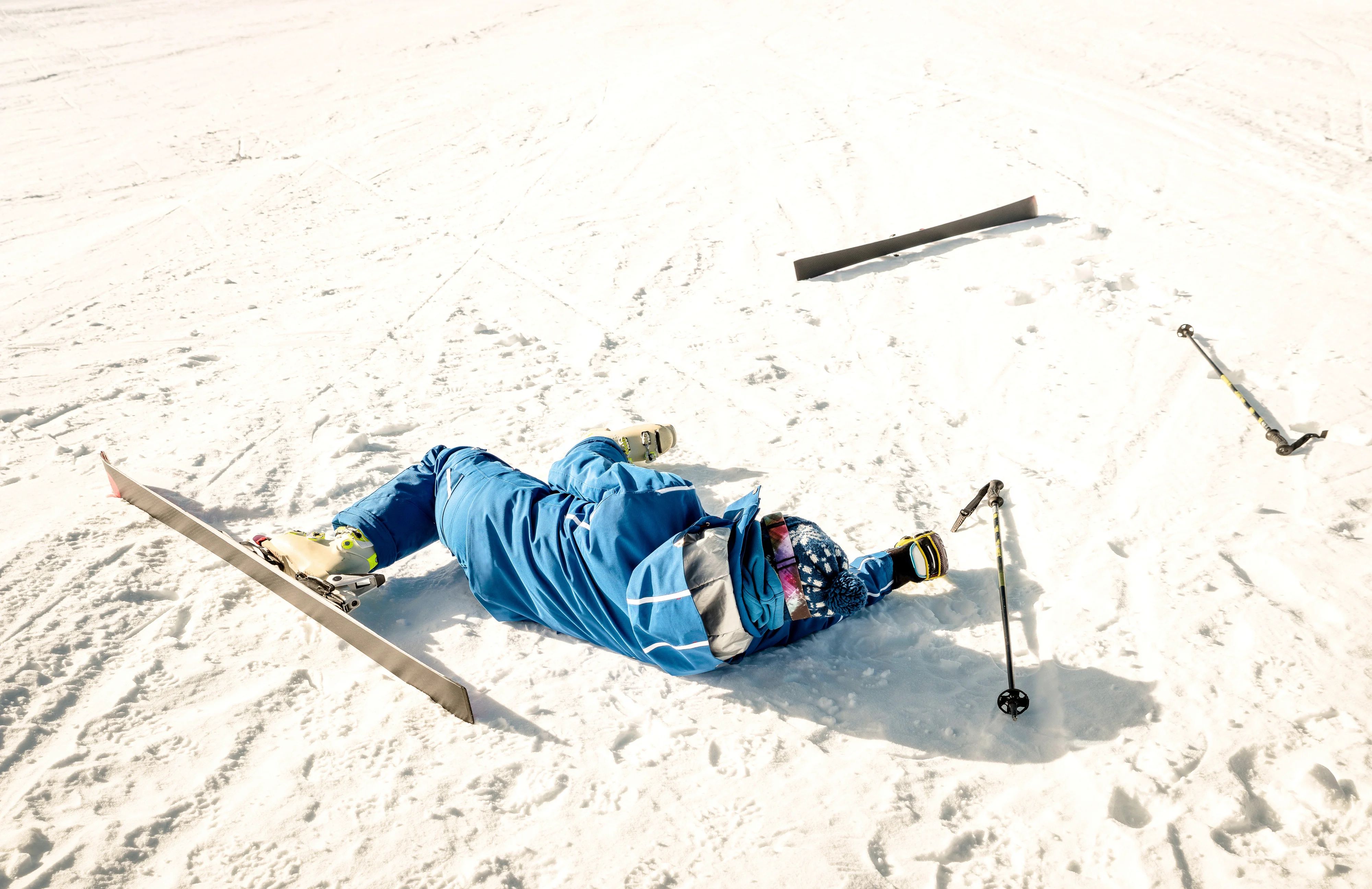
Illustration of a skiing injury.
Lower limbs: More than half of the injuries
The lower limbs are the point of contact with the ground and the system that absorbs and directs most of the loads, so it is not surprising that they are responsible for about 52% of skiing injuries. Within this category, the knees are the most vulnerable area, due to their central role in movement and their complex structure; knee ligament injuries account for about 10% to 33% of all skiing injuries. Among the four ligaments, the most common injuries are to the medial collateral ligament and the anterior cruciate ligament.
After the knee, one of the common injuries in the lower limbs is a fracture of the shin and fibula, also known as a "boot line fracture." In the past, it was sometimes linked to a failure to release the bindings, but its frequency has significantly decreased with modern equipment and proper release mechanisms. Today, it is mostly caused when the ski edge (the sharp metal strip located at the edge of the ski) catches and twists the leg beyond the bone's capacity, or as a result of a high-energy impact where the boot line serves as a pivot point.
God forbid. Leg fracture
Upper limbs: Less common - but the thumb stands out
About 14% of skiing injuries involve the upper limbs. Falls in which skiers try to brake with their hands often lead to injuries to the shoulders and wrist, but the upper structure that is most frequently injured is actually the thumb.
“Skier's thumb”: One of the common injuries in the field
Injury to the ulnar collateral ligament of the thumb, known as "skier's thumb," usually occurs when the pole gets caught during a fall and pulls the thumb away from the hand. This injury is considered the second most common in skiing, and sometimes it is not even reported because some skiers continue to function despite the pain and limitation.
Additional injuries to the hands occur from falling on an outstretched hand: landing on the palm can lead to a sprain in the wrist or fractures in the forearm bones, while a higher force transfer may cause injuries to the arm, shoulder, or collarbone. The shoulder is particularly vulnerable due to its complexity, and therefore dislocations and tears in the tendons are relatively common during fall braking.
Ouch. Thumb fracture
Head and neck: Less common - but the deadliest
Head and neck injuries account for about 13% of all skiing injuries, but they are considered the most severe due to the risk to the brain and spinal cord. Direct impacts to the head or neck are one of the common and dangerous injury mechanisms, with concussions being the most common injury in this category.
The use of helmets and technological improvements have reduced the overall rate of head injuries. However, despite an increase in the rate of helmet wearers to about 80% in the 2016–2017 season, the number of fatalities resulting from head injuries has remained stable, a figure that suggests that helmets primarily help reduce minor to moderate injuries but do not eliminate the risk in cases of extreme forces.
Understanding the injury hotspots and mechanisms of occurrence can serve as a practical tool for risk reduction: strengthening supporting muscles may help reduce inward collapse of the knees, awareness of danger when trying to save a backward sitting posture may prevent ligament injuries, and a helmet, while not a solution for every scenario, remains the most important layer of protection in decisions on the slope.

Want to keep reading?
The rest of this story is available in the SnowBuzz app. Open the app or install it to continue from the exact point where you stopped.